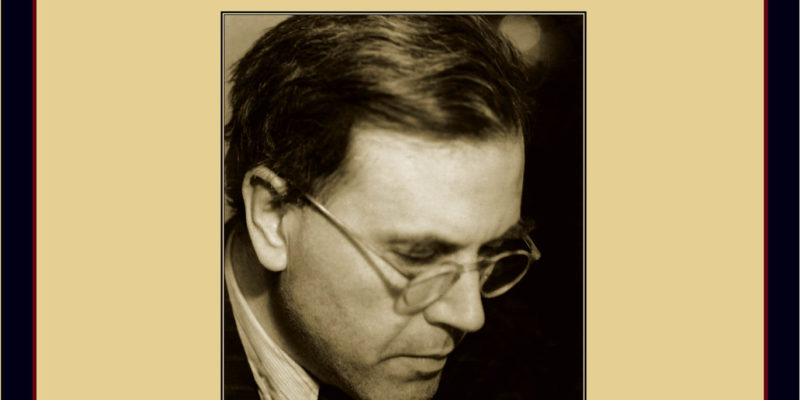
Dietrich von Hildebrand in
Ticino, Switzerland
Dietrich von Hildebrand wrote prolifically throughout his entire life. Beginning with his two dissertations and culminating in his magisterial work in the philosophy of beauty, the Aesthetics, von Hildebrand's work is marked by the fact that he wrote with originality and brilliance on a great variety of subjects; always in search, to borrow a phrase from C.S. Lewis, of the "permanent things."
Von Hildebrand's writings can be classified in many different ways. Yet however one makes these classifications, one must realize that whatever the subject, von Hildebrand always remained true to his fundamental identity as a philosopher. Not that everything he wrote was difficult or complex; philosophy is, after all, not about complexity but about a certain way of probing to the very depths of things. (Someone once said very wisely that philosophy studies the questions that children ask.) Von Hildebrand's faithfulness to his true self as a philosopher give all of his writings a freshness and special clarity. One of von Hildebrand's students perhaps summarized von Hildebrand's philosophical spirit best, namely that for von Hildebrand the question of truth was always primary. Convenient, popular, marketable, and so on, where all secondary questions, as his works eminently testify.
Despite the fact that Hildebrand always wrote as a philosopher, his works can be usefully classified into at least three basic categories:
1. Philosophical Texts. Approximately half of von Hildebrand's writings are works of formal philosophy, among them his classic work in fundamental morality, Ethics, and his important book on metaphysics and epistemology, What is Philosophy?. Von Hildebrand also made important contributions to perennial themes in Christian philosophy - man and woman, sexual purity, virginity, and marriage - as books such as Purity and Virginity, Man and Woman, and Marriage testify.
2. Religious Writings. From the time of his conversion to Catholicism in 1914, von Hildebrand wrote ardently and prolifically on religion, spirituality, and apologetics. His masterpiece in this area, Transformation in Christ, is considered by many to be a classic in Christian spirituality.
As a deeply committed Catholic, von Hildebrand did not shy away from bringing his philosophical gifts to bear on questions of religion. And though he always remained true to the rightly understood autonomy of philosophy, many of von Hildebrand's writings were deeply inspired and motivated by his profound Christian faith. Thus it is that his religious works, notably Transformation in Christ, are filled with important philosophical contributions, and his philosophical works, such as Ethics, are filled with important, religiously inspiried insights.
3. Political Writings. Fleeing Germany in 1934, von Hildebrand put his intellectual talents to work in opposing the poison of the rapidly rising German National Socialism. As the founder of his own anti-Nazi newspaper, The Christian Corporative State, he did intellectual battle at the very roots of the Nazi ideology.