Who is Dietrich von Hildebrand?
What is the Legacy Project?
Why is Dietrich von Hildebrand Important Today?
Advisory Council
Staff & Trustees
A Special Appeal from Alice von Hildebrand
For Translators
For Donors
Past Events
Audio/Video Archives
Newsletter Archives
Internships
Online Bookstore
Contact Us
 
Transformation Summer 2005 Web Version


Inside this Issue:


From the Desk of the Director
Excerpts from von Hildebrand's The Jews and the Christian West
Remembrances of von Hildebrand by his Friends: Stephen D. Schwarz

List of Advisory Members
Staff & Trustees

Printable Version

Top
From the Desk of the Director:

DOUBTLESS, the most important events since the appearance of the maiden issue of Transformation have been the death of Pope John Paul II and the election of Pope Benedict XVI.


John Paul was a figure of overriding importance in the lives of many who were also deeply influenced by the thought and witness of Dietrich von Hildebrand, including several members of the Advisory Council.

Yet the relationship between John Paul and von Hildebrand goes deeper than the fact that their disciples and devotees overlap. If anything, the appreciation of these two giants by the same people would seem to point to what someone recently described as a “spiritual kinship” between John Paul and von Hildebrand.

John Paul and von Hildebrand never knew one another personally. Since von Hildebrand died before the elevation of Karol Wojtyla to the papacy, it is not surprising that he never became acquainted with the thought of Wojtyla. John Paul, on the other hand, read and appreciated the writings of von Hildebrand, making references to von Hildebrand in several of his philosophical essays. On two separate occasions John Paul described von Hildebrand as “one of the great ethical thinkers of the twentieth century.”

Here is hardly the place even to begin an adequate unpacking of this “spiritual kinship,” yet those who have immersed themselves in the thought and, more importantly, in the spirit of both men will, I think, agree that such a kinship does indeed exist. It is a kinship that expresses itself in the relentless and uncompromising love of the truth, in the strong affinity for the personal, in the eloquent defense of the dignity of the human person, in the keen sense for the ultimate seriousness of morality, in the beautiful, uplifting, and thoroughly positive vision of married love and sexuality, and, above all, in the ardent love of Jesus Christ and His Church. Suffice it to say that it is the task and privilege of philosophers, theologians, and historians to explore more closely the rich and important relationship between these two thinkers.

As a contribution toward this exploration, the Legacy Project, beginning in the fall issue of Transformation, will begin a small series of short reflections on the kinship of John Paul and von Hildebrand. John F. Crosby was privileged to have had von Hildebrand as his master in philosophy and also to have had the opportunity to be with John Paul on countless occasions. He knew the thought of each of them and will offer his reflections in the next issue.

Late in 2004, I wrote to John Paul to tell him about the Legacy Project. His response of gratitude and blessings came in the form of a letter from his secretary, Archbishop Stanislaw Dziwisz, in January of this year. I did not realize at the time that I was receiving John Paul’s farewell blessing. (To see this letter please click here).

Many of you already know that Cardinal Joseph Ratzinger joined the Legacy Project as an Honorary Member late in 2004 and also that I subsequently had the great privilege of discussing the Legacy Project with him in person. The Cardinal was wonderfully warm and spoke with great appreciation and respect for von Hildebrand. Perhaps you have seen Cardinal Ratzinger’s recent and very striking assessment of von Hildebrand in his preface to Alice von Hildebrand’s biography, The Soul of a Lion:

I am personally convinced that, when, at some time in the future, the intellectual history of the Catholic Church in the twentieth century is written, the name of Dietrich von Hildebrand will be most prominent among the figures of our time.

You can only imagine my joy and gratitude at Cardinal Ratzinger’s elevation to the papacy as Pope Benedict XVI. Just days after his election, I sent a congratulatory letter in which I offered him our loyalty and service as fellow “laborers in the vineyard of the Lord.” Though I had discerned a special kairos––a call of the moment––in the Legacy Project from the very beginning, this opportunity to offer it to the Holy Father has transformed and deepened my commitment and enthusiasm.Come the fall, we hope to begin a two-year initiative to translate the social and political writings of von Hildebrand. These include the more than seventy anti-Nazi tracts he wrote during the 1930s and extensive selections from his memoirs of which only short excerpts have been published in German.

We are also launching a new initiative to produce a Dietrich von Hildebrand anthology, or reader. The reader would feature fifteen to twenty chapters on various important themes—marriage, liturgy, beauty, ethics, political witness, etc.—featuring choice selections from von Hildebrand’s writings along with brief introductions. Our hope is that a highly accessible publication will not only serve to introduce the thought of von Hildebrand but also to “prepare the market” for the translations we will be publishing in coming years.


John Henry Crosby
Founder & Director
Top
Excerpts from von Hildebrand's The Jews and the Christian West :

WHEN Hitler came to power in 1933, von Hildebrand fled his native Munich. He went to Vienna and offered to collaborate with the Austrian chancellor, Engelbert Dollfuss, in resisting the “Nazification” of Austria. Here he founded an anti-Nazi journal in which, until 1938, he worked relentlessly to unite the intellectual opposition to German National Socialism.
In May 1937, von Hildebrand participated in a lecture series sponsored by a Viennese organization called the Pauluswerk which had been established to promote and facilitate the conversion of Jews to Christianity. Von Hildebrand, who played a role in its founding, was particularly interested in using the Pauluswerk to combat anti-Semitism. In his words: “…the fight against anti-Semitism should be taken up by Catholics everywhere to show the Jews the true face of the Church.” The Legacy Project is proud to present for the first time in English excerpts from our translation of von Hildebrand’s lecture at the Pauluswerk entitled, “The Jews and the Christian West”:

The great battle for the Christian West, which is raging furiously today, draws the question of the nature and spiritual roots of the West into the center of intellectual analysis and debate. It is therefore not coincidental that the question of the Jews and the Christian West is presented first in this lecture series on the Jewish question.


In speaking of the “West,” we mean not only a geographic region or a particular number of nations, but above all a spiritual realm with a very specific character. …[I]t is beyond doubt that a Western spirit does exist, which despite all national differences––of the Italians, the French, the Germans, and so forth––possesses a clearly formed, sharply contoured countenance, which predates the birth of these nations, and which, despite the apostasies and denials of it since the Renaissance, is still alive today. For us it is above all crucial that we understand that Israel has an essential share in the formation of this Western spirit, something which many today forget or would want to forget….


Israel––Representative People of Humanity

Like no other people, Israel was a classical representative of humanity. I do not say that it possessed this role on the basis of its natural disposition but that it became this by divine election…. [T]his election and the special revelation so deeply bound up with it, formed and molded Israel and its history in the deepest and most interior way. The spirit of Israel as we find it in the Old Testament is inseparable from the fact of this election and from the light of revelation given to the Jews, just as the cultural expressions of the Christian Middle Ages are inseparable from the fact of Christian revelation.


Israel was the classical representative people of humanity…. It was this, first of all, through the unique spirit which it radiated and by which it was permeated: Israel was the only people conscious of man’s metaphysical situation before God, the only people whose life unfolded in conspectu Dei––in the sight of God. If we think of Abraham, Isaac, and Jacob, or of Moses and David, we never encounter just one or another ethnic characteristic but man qua man in his direct confrontation with God. Man stands before us in all of his heights and abysses, man in his yearning for God and in his apostasy from God, man caught in the surge of his disordered passions and man in his need for redemption.… Israel was the only people to whom, before the fullness of time, God showed His countenance, the only people He called by name… Objectively, the entire world at that time stood in a state of advent, but Israel alone was aware of this. Of course, Israel still walked in a state of semidarkness, for the full light of divine truth had not yet been illuminated. Yet while the others still walked about entirely in the darkness, unaware of their situation, Israel was conscious of its state of semidarkness and longed for the full light.


The history of Israel…has to do not just with the concerns of a particular people but with what is of real and ultimate significance for every human being…. In the Old Testament, we encounter all of the decisive and most important human stances in their classical forms: the faith and “Here I am Lord” of Abraham; the trust in God of Isaac; the powerlessness of man and his surrender to God in Job; the struggle of man with God in Jacob; the repentance of David; the most ardent earthly love in the Song of Songs…; the pride and falling away from God with Solomon; the dance around the golden calf, just as the Israelites had left Egypt; and the holy reverence before God of Moses, surely the most fundamental stance of all authentic human existence.…


While the world of Greek culture and thought is the fountainhead of Western intellectual life and culture, while this people shines into human history like a bright spiritual light, while one finds among the Greeks the home of authentic philosophy and art, Israel is the home of a universal humanity in which quite other depths of human existence are illuminated. Here the drama of man as such is played before our eyes; here we have to do with realities––arrogance and concupiscence, persecutions and sorrows, love and hate, yearning for God and immersion in mundane things, true faith and idolatry, sin and repentance, rebellion against God and adoring reverence, apostasy from God and love of God––realities that are of ultimate relevance to anyone bearing a human countenance, whether cultivated or uncultivated, talented or untalented, master or slave.


Israel was the only people whose inner point of unity lay not at a racial or cultural level but on the religious level. True belief in the one God and the awaiting of the Messiah constituted the “form” of Israel’s unity. The knowledge of that which for all of humanity is the one great, ultimate, and decisive concern held Israel together interiorly. Israel was the representative people of humanity because it was the religious people par excellence and because the religious question is the question of humanity as such, because God is the absolute concern for all human beings, the concern which addresses each human being individually.…


Christ spoke to humanity when He spoke to Israel and Israel’s response to His manifestation was the response of humanity. The apostles and disciples who recognized and followed Him were representatives of humanity, as were the Pharisees and all who crucified Him. It is more than naïve to see the crucifixion of Christ as a specific response of the Jewish people exclusively, as if His fellow countrymen would not have crucified Him had He been Roman, Greek, Persian, or Germanic. The “Crucifixus” was the voice of fallen humanity, which Israel represented here as in every other situation. But the response of the apostles and disciples, “Lord, where shall we go, for You have the words of eternal life?”, was also the voice of humanity in its searching and yearning for God. And is not the denial of Christ by Peter and the sleeping of the three disciples on the Mount of Olives a prototype of our bearing toward Christ, does not Christ in the liturgy speak to all of us each year when He asks, “Could you not watch with me for even just one hour?” Israel is the representative people of humanity; therefore its fate must touch us more, must concern us more, than that of any other people….


Israel––the Lost Son

The role of representative of humanity, once that of Israel, has now passed over to the Church of Christ. The head and heart of humanity, the link between God and man, is no longer in Jerusalem but in Rome.


Nonetheless, Israel has not ceased to have a certain primacy of place among the peoples. Just as belief in the true God and expectation of the Messiah once provided the source of unity for Israel, so its rejection of Christ has fused it together over the past two thousand years and placed its mark on its being and destiny. Israel is perpetually formed by the religious: positively at first, and then negatively. For, willingly or not, Israel is always concerned with the great question of human destiny, namely the stance toward Christ: initially in its longing expectation of the Messiah and today in its compulsive hardness toward Christ. Yet even in its apostasy, in the lapsing of its vocation, Israel continues to be a metaphysical representative people of humanity…. Thus, they continually bear witness to Christ indirectly. The Jews in their many sufferings and in their continuing existence are, like no other people, the expression of the mysterious dispensation of Providence….

Even so, Israel does not stand within the Christian West as a foreign body but as a providentially intended element of central importance. The lost son too belongs to the family and cannot be considered as just another foreigner. Indeed, the conversion of all people and all nations is a central and immediate concern of Christians. Yet the conversion of Israel, the people of God, is the special concern of Christianity in quite another sense.…


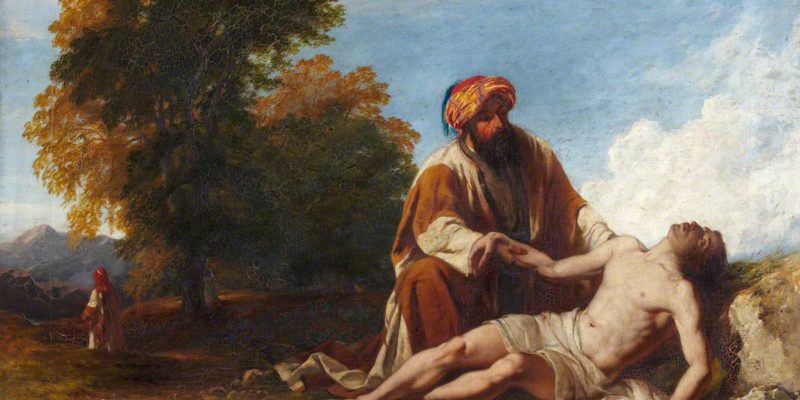
In truth, the Jews do belong to the Christian West and their aloofness and obstinance toward Christ should be a source of deep sorrow for us. Their conversion, their organic integration into the Church, is a challenge entrusted to us by God which we are not permitted to shirk. To this position the Church has always adhered. …The Church was aware of the special mystery enveloping this people and it waited for the return of the lost son, hoping and praying…. For today, as in the parable of the Lord, it is no longer the Gentile but the Jew who is the lost son….


The True Vocation of Israel

Not assimilation but the renewal of Israel through its conversion to Christ is the only worthy response to the vocation and sacred history of the people of Israel. We Christians, however, ought not to press the Jewish people and treat them as a “foreign body.” We who tolerate so many non-Christians and apostates in our midst should not brush them aside as troublesome parasites by means of special laws…. And we must lovingly ease the return for the lost son to the Father’s house, if we would be disciples of Him who prayed on the Cross, “Father forgive them, for they know not what they do….”


Tua res agitur!

There is one thing above all which we must not forget, namely that the present attack on the Jewish people is not just about a minority problem…. Hence the current attack on the Jews targets not only this people of fifteen million but mankind as such. Each one of us must perceive the present degradation of the Jews as an attack on human nature as such.… And so we all are reviled and violated whenever the dignity of a man is trampled under foot.…


Did not Christ the Lord say, “What you have done to the least of my brothers, you have done to me”? Is not the defamation and degradation of the Jews a direct attack against the incarnate God, against human nature sanctified by the incarnation? Indeed, what is happening today is not the special concern of a particular people. No, true for us all are the words, Tua res agitur!––This concerns you!

Translated from the German by John Henry Crosby. From Die Menschheit am Scheideweg (Regensburg: Verlag Josef Habbel, 1955, pp. 312-40).

Top
Remembrances of von Hildebrand by his Friends: Stephen D. Schwarz

ANCIENT family friend, godson, and former student of von Hildebrand, Stephen D. Schwarz offers his remembrances of von Hildebrand. Readers are encouraged to read the unabridged memoir at www.hildebrandlegacy.org. Schwarz is presently professor of philosophy at the University of Rhode Island.


The deep and far-reaching influence of Dietrich von Hildebrand on my life began even before I was born. My mother grew up agnostic in an ethnically Jewish family. Von Hildebrand was a major influence in helping her find her way to Christ and His Church; and this was an event of major significance in her journey towards her marriage to my father, a life-long Roman Catholic. Von Hildebrand was also instrumental in making this marriage possible at all, for he helped persuade my anti-Semitic grandfather to overcome his strong opposition to letting his son marry a Jewish woman. Von Hildebrand was my godfather, and he held me as I was baptized on November 12th, 1932. I was named after him; my middle name is Dietrich.


It was through von Hildebrand that my father found his way to philosophy. As a student at the University of Munich, Germany my father found, in his classes only historical philosophy; that is, philosophy in the manner of, “Kant says…, Hegel says…”; but never a word about what is really true. Then he attended one of von Hildebrand’s lectures. A new day dawned for him. Here was a man who dared to say what he saw as really true. Here was truth, not just what so-and-so said. “This is the way it is, this is the nature of love, of justice, of the human person.”


My father formed me in my philosophy; but he was able to do so only because von Hildebrand had first formed him. Von Hildebrand was my philosophical grandfather. But he was also my philosophical father. It was above all from him that I learned the art of philosophizing: wonder at the greatness of reality, wonder at the mysteries of reality, careful analysis of the essence of fundamental realities, such as time, knowledge, beauty and so many others, openness to the rich data of reality as presented to us in immediate experience. It was not only the content of his words that formed me. It was also, and perhaps even more, the passion with which he pursued truth, that made me what I am as a philosopher.


The radiance of his personality shone wherever he went. He had a happiness that was both natural to his personality and supernatural in its root in his love of Christ and His Church. He truly lived his faith at every moment. And he lived his philosophy, a philosophy focused on value and our response to value, especially love and responses to moral values and the values in beauty and art. He had received much, and he was always eager to share it with others; to herald the good news, not only of the supernatural world of Christ, but also the world of natural beauty and truth. He loved music, he lived his love of music, especially Bach, Mozart, Beethoven, and Schubert. This love formed and deepened my own love of music, which has always been at the core of my being.
When I philosophize, his presence is always there with me. Inwardly I philosophize “before” him, profoundly aware that whatever is good and valid in my thinking is due to him. He was, and is, a gift for me for which I cannot begin to thank God enough.
Top
Members of the Advisory Council:
Alice von Hildebrand
Honorary Member
Joseph Cardinal Ratzinger
Honorary Member
Advisory Council

Rocco Buttiglione
Italian Minister of Culture

Kenneth L. Schmitz
University of Toronto

Ronda Chervin
Student and Friend of von Hildebrand

Stephen D. Schwarz
University of Rhode Island
W. Norris Clarke, S.J.
Fordham University
Josef Seifert
International Academy for Philosophy
Catholic Pontifical University of Chile
Louise Cowan
University of Dallas
Madeleine F. Stebbins
Student and Friend of von Hildebrand
John F. Crosby
Franciscan University of Steubenville
Tadeusz Styczeñ, SDS
Catholic University of Lublin
Damian P. Fedoryka
Ave Maria College
Jules van Schaijik
Independent Scholar
Andreas Laun
Auxiliary Bishop of Salzburg
Otto von Habsburg
Former Member, European Parliament
President of the Paneuropean Union
Karla Mertens
Dietrich von Hildebrand Gesellschaft
Michael Waldstein
International Theological Institute
Michael Novak
American Enterprise Institute
Fritz Wenisch
University of Rhode Island
Edmund D. Pellegrino, MD
Georgetown University School of Medicine
Top
Staff & Trustees:


Staff

John Henry Crosby
Founder & Director

Anthony Gualandri
Development & Special Projects

Trustees

John F. Crosby
Carrie R. Gress
James M. Hostetler
Ryan K. Lovett
Michael J. Miller
Kevin O'Scannlain

Back to Letter
© 2005 Dietrich von Hildebrand Legacy Project


If you feel you have received this email in error, or wish to be removed from our distribution list, please reply to this email and your request will be processed immediately.

If you experience any difficulties viewing any portion of this email, please write the webmaster at info@hildebrandlegacy.org.